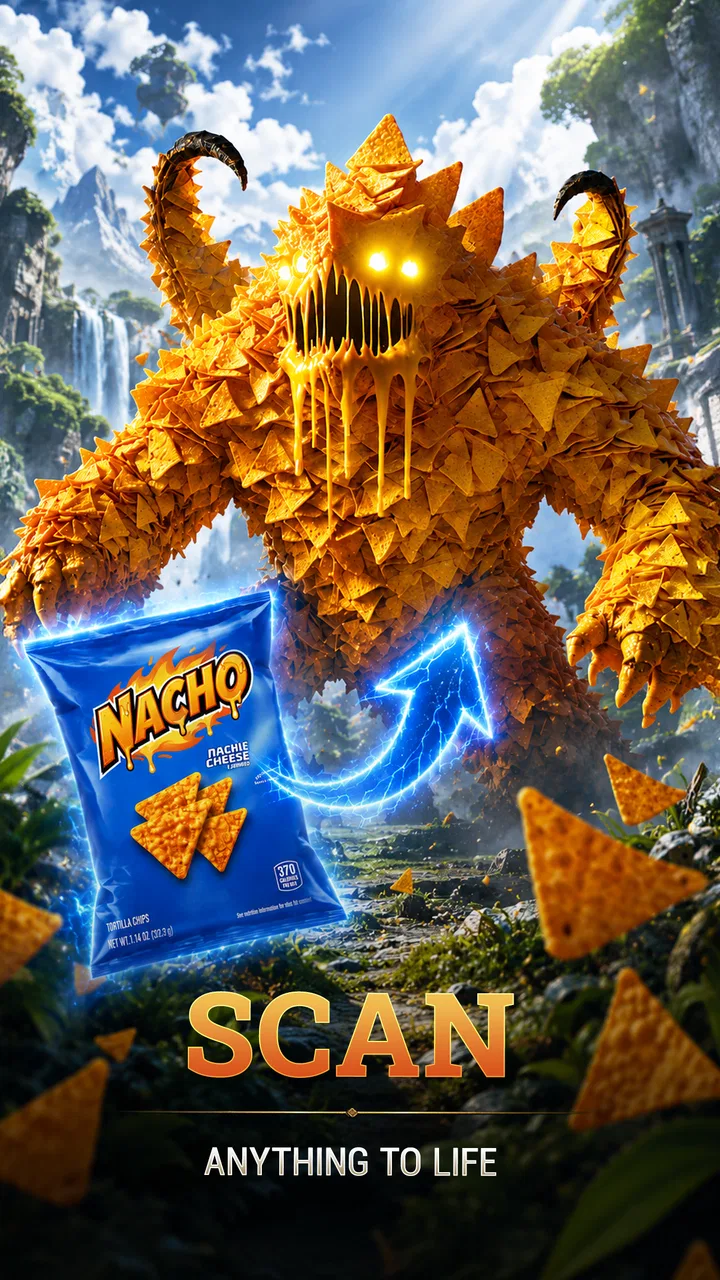
Warcodes - AI RPG Game
- 4.5
- Rating
- 100.00K
- Installs
- Free
- Price

 Analysis by App-foxy
I approached Warcodes as a strategy game first and as a practical mobile experience second. Its central idea is unusual: everyday objects become creatures that can be used in battles inside an AI-driven role-playing arena. That gives the game a playful identity immediately, but it also creates a more important question for me: how easy is it to understand, control, and enjoy when the screen, pace, or setting is not ideal?
After spending time with it, I see a game with a memorable premise and a fairly specific audience. It is free to start, made by Cozy Orchards, and aimed at players aged 10 and up. Its current version is 14.0.1, and the game has passed the 100K-install mark, so it is not an obscure experiment with no player interest. At the same time, its average rating sits at 3.0 from around 1.1K ratings, which matches my overall impression: the concept is attractive, but the experience can feel less immediately clear and comfortable than the idea suggests.
How clearly the game presents its world and controls
I focus here on how Warcodes communicates its unusual object-to-creature idea and what that means for following a battle, rather than judging it only by its premise. I also consider how a player can check whether the game’s presentation suits their eyes, hands, and playing environment. That practical test leads naturally to the question of what the game feels like in an ordinary short session.
You May Also Like

 Pandora - Music & Podcasts
Pandora’s Music Is Easy to Start, but Harder to Recover
Pandora’s strength is its low-effort path from a seed to a station. Its weak spot is how much confidence it asks you to place in connection, setup, and quiet recovery.

 8 Ball Pool
 Is Built on Rivalries, Rematches, and Routine
A close look at the rivalries, rematches, shared routines, and unanswered safety questions that turn a quick pool match into a persistent mobile community.

 Samsung Music
’s Quiet Strength Is Playing What You Already Own
Its reach comes less from spectacle than from dependable access to a personal library. That simplicity is both the app’s strongest retention engine and its ceiling.

 AccuWeather: Weather Radar
AccuWeather Review: A Quick, Clear Forecast for Everyday Decisions
For everyday plans, the best forecast is the one you can understand quickly. AccuWeather makes rain timing, radar, and local conditions easy to act on, with a few trade-offs.

 Hill Climb Racing
Why Hill Climb Racing Still Turns Crashes Into One More Run
A tiny car, a bumpy hill and one more upgrade: Hill Climb Racing keeps resurfacing because its simple chaos makes every near-miss feel personal.

 AliExpress - Shopping App
AliExpress Makes Global Shopping Feel Personal, but Shoppers Bear the Risk
AliExpress turns a global marketplace into a pocket-sized discovery engine. Its reach is useful, its shopping loop compelling, and its trade-offs easy to miss.
More From Our News Desk
View All News


Readability and navigation
The biggest strength of Warcodes is that I understand what makes it different within a few moments. Instead of asking me to memorize a conventional fantasy roster, it frames familiar real-world items as battle-ready creatures. That unusual transformation is a useful starting point because it gives me something concrete to imagine. I am not simply choosing another warrior, wizard, or monster; I am thinking about how an ordinary object might behave when placed into a role-playing battle.
That said, an original concept still needs a clear route through the game. Strategy players usually want to know three things quickly: what each unit does, what choice is available now, and what consequence follows from that choice. Warcodes works best when those relationships are easy to follow. When they are not, the AI element can make the arena feel more mysterious than strategic. A player may understand that the opponent is making decisions, while still being unsure why a particular move succeeded or failed.
I would recommend approaching each battle slowly at first rather than tapping through every prompt as soon as it appears. The first few sessions are more useful when treated as a learning period. Watch how the object-creatures behave, notice which actions appear to matter, and avoid judging the whole game from one confusing encounter. This is especially important for younger players, casual users, or anyone who finds dense game interfaces tiring.
Navigation also matters outside combat. A strategy game becomes much more approachable when the path from preparation to arena to result is obvious. Warcodes has a stronger chance of holding my attention when I can move through those stages without repeatedly wondering whether I have missed an important option. Players who enjoy experimenting will probably tolerate some uncertainty; players who prefer transparent menus and explicit tutorials may need more patience.
The title’s short store description, “Warcodes,” does not explain much by itself. The fuller premise does more work, but it still leaves room for discovery. That can be appealing if I want a game that feels odd and exploratory. It is less helpful if I am deciding quickly whether this is a conventional turn-based strategy game, a collection game, or a more automated role-playing experience. I would not install it expecting the immediate familiarity of a standard board-game adaptation.
Understanding information during a battle
For me, readability is not only about the size of text. It is also about information hierarchy. A battle screen can be technically legible and still feel difficult if the important action, status information, and feedback compete for attention. Warcodes benefits from a deliberate approach: I focus on the active choice, then check the result, then prepare for the next exchange. Trying to read every visible detail at once makes the game feel busier than it needs to be.
This gives the game an interesting trade-off. The AI role-playing format can create surprise, which is part of the appeal, but surprise is more satisfying when the outcome remains understandable afterward. If I lose, I want to learn something I can use next time rather than simply conclude that the system acted unpredictably. That distinction will matter to experienced strategy players, who generally accept losing as long as the loss teaches them how to improve.
A practical tip is to keep a simple mental record of what happened in the previous encounter. I pay attention to the object I selected, the kind of response it triggered, and whether my mistake came from timing, choice, or misunderstanding. This turns a potentially opaque AI battle into a small experiment. It is one of the better ways to make the game feel strategic rather than random.
Motor and sensory considerations
War game controls can become uncomfortable when they demand fast repeated taps, precise gestures, or constant visual tracking. Warcodes is easier for me to approach when I treat it as a decision game rather than an action game. The more the experience allows me to think before committing, the more suitable it feels for players who prefer calm interaction or who have difficulty with rapid input.
I would still be cautious about recommending it to someone who needs guaranteed low-motion presentation, strong contrast options, text resizing, screen-reader compatibility, or fully remappable controls. I cannot present those as established features here, so my practical advice is to test the opening experience on the intended device and stop if the interface causes strain. A game can be creative and enjoyable while still being a poor fit for a particular visual, auditory, or motor need.
The object-based theme may help some players process the game world because familiar items are easier to picture than abstract statistics. That is a genuine advantage for me. I can build an association between an item and its role, which is more memorable than learning a list of invented names. However, this benefit depends on how consistently the game communicates each creature’s behavior. If the visual identity is clear but the battle result is not, the familiar theme only solves part of the accessibility problem.
Sound is another consideration in everyday use. I would not assume that audio is essential for understanding every decision, so I would try the game in a quiet setting first and then in a noisier one. If the important information is visible, it becomes much easier to play in public or with the sound muted. If key feedback depends on audio cues, a commute or shared room may be less comfortable. That is why I see Warcodes as a game worth testing in the exact conditions where I expect to use it.
Situational access in ordinary routines
One realistic use case is a short break between tasks. I might open the game while waiting for an appointment, play a small portion of an encounter, and put the phone away before returning to work. The unusual premise makes it more interesting than a routine puzzle, and the strategy framing gives me something to think about after the screen is closed. For that kind of player, Warcodes can be a welcome change from familiar card battlers.
There is a catch: an AI role-playing arena is not automatically ideal for every short session. If a battle requires attention at a moment when I am distracted, the experience can become frustrating. I would avoid starting a serious encounter while walking, handling transport, supervising a child, or doing anything that requires immediate awareness. The game may fit a spare moment, but it is not a substitute for being present in a demanding environment.
It also has potential as a conversation game. Showing someone how an ordinary object has been reimagined as a combat creature is more inviting than explaining a complicated fictional universe. I can imagine playing it with a friend who does not usually follow strategy games, using the object theme as an easy entry point. This is one of the title’s less obvious strengths: the premise can reduce the social barrier around trying a genre that often appears intimidating.
For family use, the Everyone 10+ rating makes the age range relatively approachable, but I would still expect an adult to help a younger player understand purchases and game decisions. The free entry point makes trying it easy, while the available in-app purchases range from $0.99 to $99.99 per item. That spread is important in a household setting. I would check purchase controls before handing the device to a child, not because the game is unsuitable by age, but because optional spending can change how comfortable the experience feels.
Where the experience still creates barriers
The first barrier is conceptual clarity. Warcodes asks me to accept several ideas at once: real-world objects can become creatures, the game uses role-playing structure, and battles take place in an AI arena. That combination is distinctive, but it can also make the learning curve feel less predictable than in a familiar strategy title. Players who want a clearly explained ruleset from the opening screen may prefer something more traditional.
The second barrier is the gap between novelty and control. I enjoy discovering what the game is doing, but I do not want every important result to feel like a surprise. The best version of this experience would let me experiment while still giving me enough feedback to form reliable tactics. If you prefer highly deterministic strategy, where every interaction can be calculated in advance, this may not be your ideal choice.
The third barrier is the rating signal. A 3.0 average from around 1.1K ratings suggests that the game has not satisfied everyone who tried it. I do not treat that number as a complete verdict, because unusual games often divide audiences. Still, I would set realistic expectations: the concept alone does not guarantee a polished fit for every player, and the game deserves a trial before anyone spends money inside it.
That is also why I would not compare it directly with a standard strategy board game. A conventional alternative is usually better when I want fixed rules, predictable pacing, and a familiar interface. A mainstream monster-collection RPG may be better when I want a large established world and a clearly documented progression path. Warcodes is more appealing when I value experimentation, surprise, and the humor of turning ordinary things into battle participants.
Players with limited data, older phones, or a small amount of free storage should make the decision practically rather than emotionally. The minimum operating-system requirement is Android 8.0, so compatibility is not limited to only the newest Android devices. Even so, I would install it on the device where I plan to play and judge the actual comfort of the screen, touch response, and navigation. Compatibility is not the same as accessibility, and neither guarantees that the game will feel good in a particular situation.
Who should try it, and who should skip it
I would recommend Warcodes to players who enjoy strategy games with a strong hook, especially people who like asking “what if?” about ordinary objects. It is also a reasonable choice for someone who wants a free way to sample an unusual AI-focused role-playing arena without committing to a conventional fantasy campaign. The game’s identity is clear enough to attract curiosity, and the object-creature idea gives conversations and experimentation a natural place.
I would be more cautious if you need strong accessibility controls, dislike ambiguous outcomes, or want a game that explains its systems with the precision of a competitive tactics title. I would also skip it if in-app purchase pressure makes free-to-play games uncomfortable, particularly on a shared family device. The price of entry is free, but that does not mean every part of the long-term experience will feel equally frictionless.
My best advice is to use the opening sessions as a compatibility check. Can you read the important information without squinting? Can you tell why a battle changed? Can you make choices without rushing? Can you enjoy the theme when the environment is noisy or distracting? If the answer is yes, the game’s unusual design may reward your curiosity. If the answer is no, a more conventional strategy title will probably serve you better.
An inclusive verdict on Warcodes
Warcodes is an inventive strategy game from Cozy Orchards that succeeds most clearly when its everyday-object premise becomes a reason to experiment. I like that it does not present another interchangeable fantasy roster. It gives me a playful way to think about familiar things, then places those ideas inside an AI-driven role-playing battle format.
Its inclusive appeal is real but limited. The theme can make the game easier to remember, and the decision-focused structure may suit players who prefer thinking over fast reflexes. The free download also lowers the risk of trying it. Yet clear communication, sensory comfort, motor demands, and purchase boundaries still need to be judged on the individual device and in the individual player’s routine.
With more than 100K installs and a current version of 14.0.1, it has enough presence to deserve attention, but its 3.0 average tells me to recommend it selectively rather than universally. I would happily suggest it to a curious friend who enjoys experimental strategy and does not mind learning through trial and error. I would not present it as the safest choice for players who require highly configurable access or completely predictable systems.
My final recommendation is to try it free, play in a calm setting, and judge the clarity of its battles before considering any purchase. If the object-creature concept makes you want to discover more, Warcodes has a distinctive niche. If you mainly want smooth navigation, explicit rules, and dependable accessibility options, another strategy game is likely to be the kinder choice.
FAQs for Warcodes - AI RPG Game
01What is Warcodes - AI RPG Game all about?
Warcodes - AI RPG Game is an immersive role-playing game that combines AI-driven characters with strategic gameplay. Players embark on quests, battle AI-driven enemies, and explore vast worlds. The game emphasizes character development and strategic decision-making, offering a unique blend of technology and traditional RPG elements.
02How does the AI influence gameplay in Warcodes?
The AI in Warcodes plays a critical role by providing dynamic and unpredictable challenges. It controls enemy behavior, adapts to player strategies, and enhances non-playable character interactions. This creates a more engaging and personalized experience, as the game evolves based on players’ decisions and actions.
03What are the system requirements for Warcodes on Android and iOS?
Warcodes requires Android 8.0 or higher and iOS 12.0 or later. The game is optimized for devices with at least 3GB of RAM and a stable internet connection for seamless updates and multiplayer features. Ensure your device meets these requirements for optimal performance and gameplay experience.
04Is Warcodes free to play, or are there in-app purchases?
Warcodes is free to download and play, but it offers in-app purchases. These purchases include cosmetic items, power-ups, and premium currencies that can enhance gameplay. While they can provide advantages, they are not necessary to enjoy the core game, maintaining a balanced experience for all players.
05What kind of multiplayer options are available in Warcodes?
Warcodes features a robust multiplayer mode, allowing players to team up with friends or compete against others online. The game supports co-op missions, player-versus-player battles, and guild formations. This encourages community interaction and adds a competitive edge to the RPG experience.
Pros
- Immersive AI-driven storyline.
- Stunning graphics and design.
- Real-time strategy elements.
- Engaging multiplayer modes.
- Frequent updates and new content.
Cons
- Requires constant internet connection.
- In-game purchases can be pricey.
- High device resource usage.
- Steep learning curve for beginners.
- Limited offline features.

Warcodes - AI RPG Game
Gallery